Monday, 9 May 2016

The Many Faces of the Police Procedural


Switch on the TV, and more likely or not one would find themselves watching a police procedural.  This is hardly surprising as detective fiction makes for popular TV shows and cinema, where the focus is on finding the face behind a series of unexplained events, who is often someone you would least expect-so much so that it’s now a rule in crime fiction. While the highlight of such films is the big reveal at the end, other more discerning ones detail the manner in which the perpetrator is brought to light in order to bring out the different themes on screen that the film deals with.

Consider the 1991 American film ‘Silence of the Lambs’ where the identity of the kidnapper-murderer is secondary to the other themes like- the relationship of convenience between a FBI trainee, Clarice Starling and a convicted psychopath named Hannibal Lecter who once practised as a psychiatrist, or the subtle sexism that Starling sometimes faces from her all-male team. The film presents us with the criminal Hannibal Lecter, an unexpectedly polite man with polished manners who maintains a chilling yet calm demeanour even as he describes the gruesome details of his cannibalistic exploits. This is a far cry from the more straightforward unhinged behaviour of another psychopath Buffalo Bill, whose is chased by the FBI for a series of kidnappings and murders.

A major chunk of films in the genre of detective fiction is the Sherlock Holmes type of film- where the detective’s deductive skills are the focus of interest as he traces down the culprit. In such films, the viewers find themselves making mental notes of the clues presented and formulating their own theories of the resolution of the mystery.

This brings us to another kind of police procedural- like the recently released Talvar which is based on true events of the Aarushi Talvar double murder case. Since the film draws from real life and has a highly publicized case at the centre of its plot, uncovering the identity of the culprits is no longer the primary goal. Instead, the focus is now on how the structural deficiencies of investigative agencies can mar an investigation from being objective and facts-based, and can put the wrong people behind bars.  Although balanced and objective at the surface, where it presents different scenarios of what may have happened, the film quietly makes a case for the innocence of the dentist couple and a possible miscarriage of justice.


The theme that stands out is the class differences between the investigators, especially the local police, and those being investigated. This divide provides fodder to speculative theories about the character of the victim and the motive of the crime. The police sermonize on matters beyond the law, as their faces betray envious resentment of the comfortable, liberal lifestyle of this upper middle class family. This is evident in a scene in the very first few minutes, where the police field intimate questions about the victim in local Hindi, which are rebuffed by the stressed parents in polished English. The servant-employer relationship is also explored. The scene, where the servant  is trying to reign in his drunken friends, who brazenly enter a young girl’s room with malicious intentions, sends chills down the middle class’s spine and makes it question the level of access of the lower class to their lives.


Along the lines of Talvar is the 2003 film ‘Memories of Murder’ loosely based on the real life serial rape-murders of young women in South Korea between 1986 and 1991. Much like Talvar, this film too follows a fictionalized adaptation of the shoddy investigation that ensues after the murders come to light. The film is not interested in who is behind the brutal acts but its psychological effect on a police force pushed to the edge in solving an unsolvable mystery. As the local detectives, with a touch of dark humour, try to pin the blame on and draw out false confessions from a series of suspects with a spurious connection to the case in order to make their job easier, a young promising detective from the capital city of Seoul arrives at the scene. Using his superior deductive methods and ingenuity, but regarded by the local detectives with suspicion, he tries to bring more order to the probe.
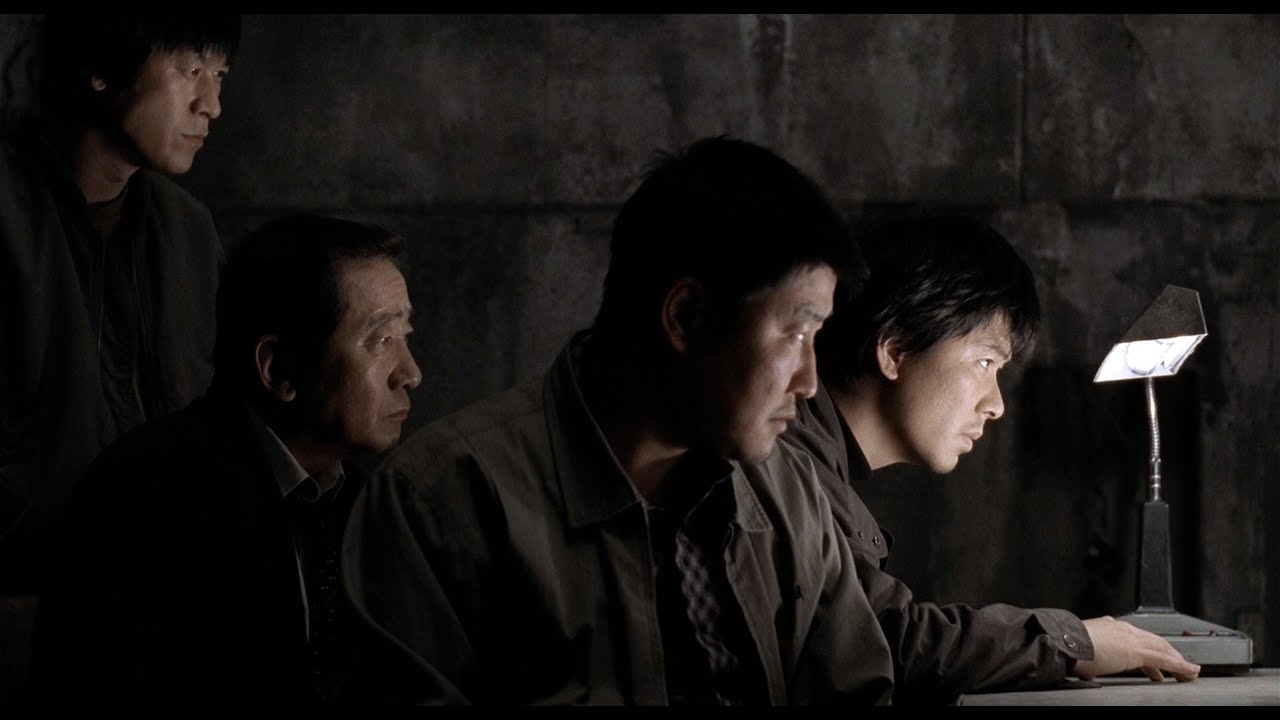

 But after all their efforts to find the murderer reach a dead end, and all their leads turn cold, the only tool left in the investigative arsenal of the authorities as well as the young, once optimistic detective, is an active imagination fuelling more unsubstantiated theories. Desperate attempts are made to string often incompatible pieces of the puzzle together. The mystery and the constant speculation that has led them nowhere continues to haunt them long after they have moved on from the case, some onto different professions altogether - thus showing how they keep looking for answers even in the face of a hopeless case.


There is some thought given to the place of women in society through the means of the investigation and the sexual violence aspect of the murders. When a junior female officer provides an important clue, the local cops snigger at her. One observes how they themselves leer at women, while being thrust with the responsibility of finding the rapist-murderer- thus showing how deeply embedded misogyny is in societies and doesn’t disappear even in the light of brutal crimes against women.


Police procedurals have been used to examine varied themes-right from the faults in the criminal justice system to other broader human values. Even in Hindi cinema, pure detective fiction like a Detective Byomkesh Bakshy exists comfortably alongside a Talvar in the same year, presenting to us the wide range in the genre.


A version of this piece was first published here: http://theindianeconomist.com/the-many-faces-of-the-police-procedural/

The Superficial Gender Role Reversal in the film Ki and Ka

In an industry that is notorious for producing commercial films with either stereotypical female characters, or those that objectify them with the male gaze, a mainstream film like Ki and Ka, which has a female protagonist who is ambitious about her career and a man who wants to take care of the house, sounds like a breath of fresh air. Such gender role reversals, when done on the screen, are often comedies and Ki and Ka is no different. However, neither does Ki and Ka flip gender roles successfully, nor is it a funny film that some might expect it to be.

Kareena Kapoor’s character Kia, is a woman who wants to be the best at what she does and see the pinnacle of success in her profession. Marriage and children are constraints for her, as she knows how career often takes a backseat for women for some time when they have to shoulder the majority of the housework and family responsibilities, with respect to kids and elders. Arjun Kapoor’s character Kabir, on the other hand, doesn’t have any conventional career ambitions but wants to stay at and look after the home like his mother. At the surface, both look like the perfect couple who have balanced out their roles and responsibilities in the marriage. They are made out to be so in the film as well, despite the glitches they face. But look a little deeper and you find that they are a dysfunctional couple, with Kia displaying a sexist streak right from the beginning. They have fights, but Kia’s borderline abusive behaviour towards her husband and her internalized misogyny are never truly resolved.

The gender-role reversal is superficial. There is a tangible attempt to make unpaid housework respectable and dignified, deserving of being viewed as an arduous, difficult and creative profession like other professions. The film also emphasises that work, be it in the office or at home, can be done by any gender. This is completely fine, but this is also accompanied by sexist humour when the term ‘wife’ is often used derogatorily by Kia. While it fits with the kind of character she is playing, a lot of the time it is used to generate humour to make the subject matter of the film more entertaining and palatable for the audience. The film doesn’t outwardly endorse her views, but the tone of humour and derision in which she casually makes some of her remarks makes us believe the opposite. The tone of the film is important here, because it takes one step back when it makes fun of what a conventional housewife is supposed to be.

This is classic misogyny. One of the main reasons why housework and childcare are looked down upon and taken for granted is because they are performed by women. Sample this fact – A woman wearing a man’s dress does not generate as much humour as a man in drag. This is because anything feminine is automatically considered inferior and worthy of ridicule as compared to anything masculine- which is the ideal that humans aspire to be in a patriarchy.

If a film, which claims to be progressive about gender issues, falls in the same pit of punch down humour, where stereotypes are peddled and the victims of that stereotype are made fun of to elicit a few laughs from the audience, then it’s not really doing anything new. And it’s not really different from those distasteful husband-wife jokes doing the rounds on WhatsApp, except that a man is playing the ‘wife’s’ role and a woman the husband’s.

While these are the issues with the content of the film, the film in itself is haphazardly edited, with many sequences showing problems of continuity. The premise of many scenes seems promising, but they fall flat on their face as we move on from one ineffective scene to the next. The only thing that stands out is Rajit Kapoor’s brief but genuinely funny performance as Kabir’s father, who has better comic timing than any of the lead actors, showing us the seasoned actor that he is.


The sequence that jolts us to the reality of marriage in India is the one with Amitabh and Jaya Bachchan (playing themselves in the film), where Jaya Bachchan casually asks her husband whether he would have compromised on his career for their home and marriage like she had to. This scene is done in a seemingly flippant way, but is quite poignant underneath when Bachchan indirectly points out the plight of millions of women who never had or have the power to choose to stay at home as Kabir did.

First published here :http://theindianeconomist.com/superficial-gender-role-reversal-ki-ka/