Saturday, 21 August 2021

What does it mean to be at home? Thoughts on Nomadland


This short piece is on the English language film 'Nomadland', released in 2020, and written, directed and edited by Chloé Zhao. It won the Academy award for Best Picture, Best Actress (Frances McDormand) and Best Director.

Right at the beginning of Nomadland, the protagonist Fern, who has given up her house and started living in a van, is asked a question on the lines of "Are you now homeless?" Fern replies instinctively "No I am not homeless. I'm just houseless". Later in the film, when she is asked about her van, she says "I will introduce you to her". These responses are at the heart of the film, as it explores the lives of modern nomads, who have no fixed residence, almost in a documentary like manner. Most of the actors in the film are not professional actors but nomads in real life. The film documents how the nomad community support each other, and there is a poignant commentary on how that is due largely to the current socio-economic systems that have failed them.

But it is not a documentary. It is a deeply personal journey of one individual, as it intersects with the lives of others in the community.  It is about what being at home means to her, and how she views and navigates the relationships in her life. Fern is a woman, who appears to have lived in one place with her husband for a long time. At some point, the town loses its industry, on which most residents depended for their livelihoods. The two, however, continue to stay in the town. But after her husband dies, and the town loses its zip code, she must look for a new home. She puts the most important of all her and her husband's prized belongings in a van and sets off. She carries with her some old and new photographs and reminisces about her fond memories. She customizes the van to her liking. She takes care of the people she meets and is taken care of by them. As far as she knows, she never really left home.

Nomadland is masterclass in filmmaking. It is abstract, yet deeply heartfelt. Like many films of its genre, it is not about the plot but about form. Like its protagonist, it does not worry about going from point A to point B. It does not worry about exposition. The best scenes in the film are when there is no dialogue. Early in the film, when Fern is packing her belongings, she gets deeply emotional as she smells a denim jacket. No amount of dialogue would have told us effectively what the acting in the scene tells us: she is remembering a loved one who is now gone. Background music is used very sparingly. Most of the film goes by in silence. And hence, in a few key scenes when the score swells in Ludovico Einaudi's music, it moves us deeply. 

                   Source: https://www.listal.com/viewimage/22868901

Similarly, at the end of the film, when she returns to her old house, it is merely the movement of the camera that tells us that the protagonist has reached the end of her emotional arc. Fern is standing in a doorway, a frame within a frame and the camera films her from behind. She is at the centre of the frame, and everything around her is dark. As she leaves the house and moves into the light, the camera follows her to reveal a beautiful landscape. It focuses on the landscape even after Fern leaves the frame. There could have been no better way to tell us that Fern has left one home to find another. I was fortunate I could watch the film in a theater. It is an engulfing experience.

Monday, 25 September 2017

On Newton- Digging Beneath the Dark Comedy

It is not so common for a well made film to get both an enthusiastic popular response and critical acclaim. Newton seems to have achieved this with relative ease, while bagging the title of being India's official entry to the Oscars along the way. It is a dark comedy that traces the efforts of an honest and idealistic government officer called Newton, to conduct fair elections in the jungles of tribal and Naxal-affected Chattisgarh. Sure, there are many dark comedies, but not many can generate humor and evoke a deep sense of unease at the same time when security personnel are advising a man looking to make a quick buck to surrender as a Naxalite. Newton is one such film. 

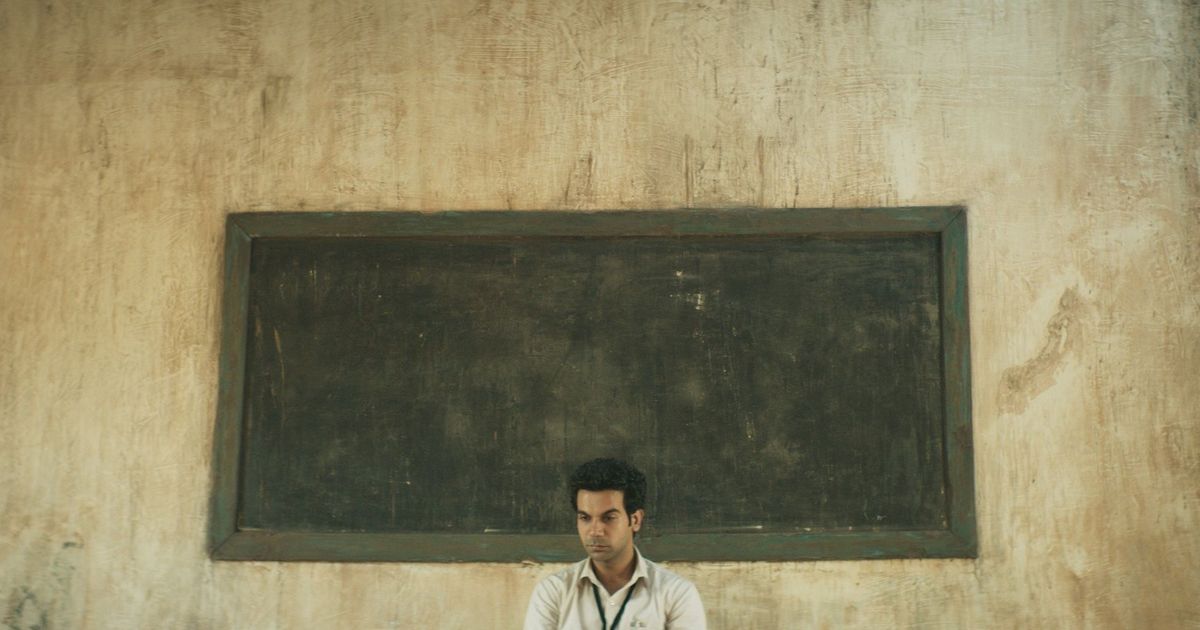
In the opening scenes of the film, Newton rejects a marriage proposal by his parents to an underage girl. What could be a casual scene in a film like this, is a fitting introduction to the protagonist, who quickly proves his mettle as an idealist with impeccable, often textbookish morals. He is the sort of man who will not take a lunch break 5 minutes before the scheduled time. When given the task of setting up  a polling booth in the forest, he dutifully takes it up and presides over it in a run-down schoolroom, without fearing the threat of the Naxals, which looms not only over the jungles, but also over the entire film. 


                  Image result for newton film                                                            

For an area which is in the middle of a physical conflict, as well as an ideological one, Newton is the outsider who thinks nothing of either side. His neutrality and lack of preconceived notions about the Naxals could be a reflection of the writing-an outsider's perspective on the issue, but combined with his unwavering faith in democratic ideals, he becomes the perfect protagonist to take the audience on a trip of self-examination of what it means to live in a democracy like India. As Newton uncovers the issues facing the people of the region, so does the audience, but it takes some reflection to see this as a film which touches upon the myriad complexities of an issue, that is often painted with hues of unquestioning nationalism, with biting black humour.

Newton is accompanied by a troupe of people and CRPF forces on this task. Among them is a seasoned CRPF officer named Aatma Singh, who tries to dissuade him from going into the forest, a local school teacher named Malko, who is not new to the farce that is carried out under the name of elections in such places and two clerks, one of whom is a diabetic who writes zombie stories in his pastime. In one scene, he narrates that the very forest they are in is also where Laxman chopped of Shoorpankha's nose in the Ramayan. But little does he know that her tale rings very close home to the tribals who are shown their place in a similar manner by the state.

To depict the relationship of the different characters with the setting, the film often frames them in different ways. Malko, who is a member of the adivasi community, is positioned quite differently in many frames. Being a local and privy to the area, the villagers and their issues, she is framed inside the walls of the dilapidated polling room, while Newton and his clerks are shown to stand at the entrance looking inside in a wonderfully shot scene. In another, Malko is standing with Newton outside the polling room, describing a local chutney made from ants. As she casually remarks on his ignorance about the way of life of a people who stay only a few hours away from him, both of them are shot from the inside, giving the audience as well as Newton a peek into the local life of the adivasis. He sits at the very front of the room, but is hardly shot in full frame in the room, sometimes only half visible. However, as the film progresses, and things fail to go as per Newton's plans, he finds his faith in his dearly held ideals shattered, which is when he is shown at the very centre of the frame. The camera zooms out, and a man who earlier was the only person brimming with optimism in a crowd standing in reserve to be assigned election duty, suddenly feels very small and helpless in front of a system that is apathetic and unyielding. 

                  Image result for newton film


Singh, who in this troupe is the state's handman and sent to do its often dirty work, has a more realistic view of how things work in such areas, and thinks that the election in the forest are a fool's errand. As someone whose job it is to keep the locals under control and always be suspicious of them, he is never shown entering the polling room (He is also forbidden to do so)-albeit in one scene where talks to Newton more as a friend than as a leader of a security force. Tied to his duty and his job, he is shown to be merely a cog in the wheel of the powers that be.             
                                                              *Spoilers Ahead*             
As it turns out, one never sees the Naxals themselves. In fact, what is promised to be one of the most dangerous places to conduct an election, turns out to be a forest like any other. When we are introduced to the film's main setting in the forest, it is deemed extremely unsafe by the authorities. Though the tone of the film is light, such is the build-up of the dangerous reputation of this area that the officer who is appointed to preside over the election booth shies away from the risky task. This raises the viewer’s anticipation of some sudden violence by the Naxals, maybe an abduction at the very least. But the only Naxalite presence in the film is their angry writing on the walls of the polling room. Indeed, the sole tension of the film comes from the CRPF, who have to manufacture some conflict at the end to give some outcome to the suspense that has been built up. Upon discovering this, Newton tries to flee the security forces, but he is caught after a chase. As Newton struggles and eventually gives in, the weight of the hands that pin him to the ground might as well be the weight of the system trying to keep him in his place. Such a treatment is fitting for a film, which appears to extol the power of Indian democracy, but slowly peels it of its sheen instead, and lays bare the lies and the rot within.

On its surface, Newton appears to be about an honest government officer's efforts to conduct a fair election in Naxalite Chattisgarh, but a lot more is going on underneath. A stray dialogue here, a seemingly irrelevant shot there reveal all that the film is truly about. The dilapidated school surrounded by houses razed to the ground, which is transformed into a makeshift voting booth, could have been the beacon of democracy’s triumph over insurgency and instability. But it is instead the symbol of coercion, where houses are burnt by those meant to protect, kids are interrogated and villagers are forced to vote for a system that neither represents them nor acknowledges their language, dignity and lives. 

When the first vote is cast after the Director Inspector General and foreign media enter the picture, it becomes obvious that this is no longer a question of fair elections, but that of preserving the honour of a meticulously cultivated identity. In a telling scene, Newton tries to tell the DIG about the problems he is facing in ensuring fair voting. The DIG asks him if there has been a booth capture or tampering of the voting machines, and in what he says is captured the entirety of the Indian imagination of what could go wrong in a democratic election, an imagination which never goes on to examine some of its very fundamental flaws.

India's official entry to the Oscars is a film that very subtly touches upon the many carefully concealed failures of the Indian state, in not only failing to bring democracy and justice to its most marginalized people, but also in recognizing their existence. In a scene that truly sums up the film, clueless villagers are rounded up like criminals by the CRPF to vote, while there is a sound of a hen being beheaded in the background. For the viewers, it might as well be the sound of the axe coming down on their rosy image of India's democracy.  


Source for the poster: By Drishyamfilmsindia - Own work, CC BY-SA 4.0, https://commons.wikimedia.org/w/index.php?curid=57713399

Saturday, 24 September 2016

Aligarh, the Film: On Privacy, Homosexuality and Isolation

A man is going home in a cycle-rickshaw. The rickshaw pulls to a stop and the driver joins the man in his apartment. After some time, two other men enter the building, slowly and hesitatingly, one egging the other one on. No sooner do they break inside the apartment, the sounds of screams and whacking pierce the cold, dark night.

This is the opening scene of Aligarh, and while this may seem like any other ordinary scene, it is not. We don’t see what goes on inside the rooms of the said apartment, we only hear the proceedings and see signs of activity from outside the building, like a cheeky passer-by or neighbour, looking up at the window and trying to decipher the goings-on inside.

This is the central event around which the film revolves- that of a university professor being walked in on during a strictly private moment. The depiction of this scene from the perspective of an onlooker far away from where the main action is taking place is deliberate and a stroke of genius, visually telling us the nature of the content of the scene- a gross violation of something that should have remained private and personal.

Aligarh is about a professor Dr. Siras, who after being filmed during a homosexual act, is suspended from the university he teaches at and is slapped with charges of homosexuality and of tainting the university’s reputation. In comes a young, enthusiastic journalist named Dipu who befriends the professor. He slowly draws the professor out from his cocoon until the latter confides in him.Throughout the film, we see shots of Siras peeking from behind closed curtains and dark windows- the perfect metaphor for someone who lives life cowering in fear, and who can never come out of the closet. The scene in which Siras is implicated, stripped and filmed is later shown to us again, once from the perspective of a camera that is part of the sting operation and once from the perspective of the professor himself. During both times, there is strong tone of voyeurism, of showing us something that should not have been seen.


Homosexuality may be the theme which one would associate with the film, but it is the theme about the right to privacy which stands out the most all the while without downplaying the humiliating ostracism faced by homosexuals in our society. While their sexuality is central to their brutal treatment by others, the film refrains from reducing them to their sexual orientation alone.

When Siras is interviewed by Dipu about the night in question, he describes how he is an outsider, a professor of Marathi among people who speak Urdu. He then goes on to talk about poetry and rues about how little people engage with it today. He composes poems in Marathi, has several books to his credit which have seen little circulation and is self-deprecating about his spoken English skills, yet perfectly translates his own poems into English. We see him caged in his apartment, wrapped in a long shawl softly mumbling a song by Lata Mangeshkar, as he sighs in melancholy. He is a person very much among us and a part of us.
His rejection from society is shown right from his dismissal by a physician when he goes to see the latter, to his removal from his rented quarters, not once but twice. The poor Muslim cycle-rickshaw driver Irfan, who was with him during the fated night, is hardly brought up again, except when Dipu goes looking for him. We hear he has disappeared after being mercilessly beaten up by the cops. Again, giving him very little attention in the narrative must be deliberate. Irfan is a person from one of the most marginalized sections of society, who completely slips from under the radar and barely registers on the film’s universe- just the way it is in real life.

Even after being cleared of charges that the university had accused him of in court, we see that it means very little to Siras. What good will winning a case do to a person who has been rejected by everyone around him, even his family, and forced into a life of loneliness and dejection? Of what use is the apartment that is returned to him a day after he takes his own life, when he has been deprived of respect and dignity all this time?

We not only see Siras’s descent into despair, but also see Dipu getting affected by it and internalizing a deep sense of discomfort. He complains angrily when he finds one of the women he is staying with as a paying guest in his room tutoring kids without his permission. He loses his temper even at the slightest hint of the invasion of his privacy, thus making us think about what Siras must have gone through. There is a sense of being watched and eavesdropped which pervades the film and which Dipu betrays in a scene where he keeps checking his back as he leans in for a kiss in a secluded location, with no signs of anybody around. The closing scene ends on the same note- with Siras squinting, straining his ears as he sits on his bed and asks if anybody’s there, before the screen turns black.

The writing is vivid. The direction succeeds in showing the increasing suffocation and paranoia faced by Siras. Rajkumar Rao is wonderful, but it is Manoj Bajpayee who takes the cake and breathes life into the professor, a man pushed to the brink of society. His performance is both moving and hard-hitting. Aligarh is an important film that deserves a larger audience, but will unfortunately be relegated to the viewing lists of a few.


Image Courtesy: The Indian Express

Thoughts on Sairat: The Social Commentary Behind The Romantic Drama


Sairat, Nagraj Manjule’s Marathi feature film after the national award winning Fandry, has been wowing audiences in Maharashtra ever since its release. With a powerful score by Ajay Atul, music that has been topping charts and a charming lead pair, Sairat would give any mainstream Hindi love story a run for its money.

To many who’ve seen the film, Sairat may not offer anything new in terms of storyline- we have had many Indian films showing young couples fighting their families and the society for love or being persecuted for entering into relationships outside their social standing. The inherent message then, is that love conquers all and renders all barriers inconsequential. However, more than a star-crossed lovers’ romantic drama a la Romeo Juliet, Sairat is a film with a striking commentary on society and the caste and class backgrounds of its protagonists.

Set in Bittergaon in rural Maharashtra, the film introduces us to this place with sound alone. As credits are being rolled on the screen, we hear a man commentating a local cricket match. The opening sequences establish the chaotic setting- the people, their language, the vast fields of sugarcane, and the political mileu. All of it looks very real, like setting foot in the village ourselves and the actors look like they’ve lived the lives of the characters they’re portraying. (This is not surprising, as the actors are from similar social backgrounds as their characters and were handpicked for this very reason, unlike the tradition of mainstream films where actors are often chosen on criteria other than whether they suit their characters.)

The male protagonist Prashant, fondly called Parshya is a lower caste boy and son of a fisherman, who has a crush on the rich, landed, upper caste, local political leader’s daughter Archana (Archie).  The feisty, tractor and bullet-riding Archie, who pushes out a group of boys from a well because she wants to swim in it with her friends, is used to having her way. This sequence follows her father mocking his political opponents for not keeping a firm hold on their women, showing a society that places its collective morality in their absence of agency and sexual fidelity. When she sees Parshya trying to pursue her, she reciprocates with enthusiasm and saves Parshya from being beaten up. While she is the female protagonist in the film, this is quite uncharacteristic of the romantic interest of a male lead. She continues to subtly break such gender stereotypes even later, when we see her drive her husband around in a big city, a minor yet refreshing change from watching women in the forefront, rather than the background.

Aiding in the diversity of the social setting are Parshya’s friends, Pradeep (langdya), a boy with bowlegs and Salim (Salya), a Muslim – all of them marginalized in some way in their village. Even as we see Pradeep rationalizing his feelings not being reciprocated by the girl he likes as an inevitable consequence of his slight disability in what is a wonderfully done scene, Parshya and Archie revel in their affection for each other, the difference in their backgrounds not coming in the way of their budding romance. There are symbolic references to it though, like in the scene where Archie is seen dancing in a balcony on the top floor, while Parshya is dancing on the ground below.

Dodging Archie’s family and narrowly escaping the witch hunt that ensues after they are caught together, they flee to Hyderabad. This is when the difference in the stature of the two is magnified. Both find adjusting to their new surroundings difficult, especially Archie, whose circumstances see a drastic fall as compared to her life at home. We see some friction between the two, with Parshya even showing an abusive streak. But it is only when they leave their prior identities and the social hierarchies inherent in them behind, that they start their life together from scratch.

If you’ve not seen the film, please stop here as spoilers follow.

Just as we are relaxing in our seats from the tension of the chase sequences from before and preparing for a happy ending, that the final blow is delivered. A flock of birds appears in the background, an omen of impending events that we see throughout the film, and a sudden change in tone of the film follows- one moment you have a group of guests quietly drinking tea, browsing through the couple’s albums, playing the part of relatives and friends on a normal visit, and the next moment you find the couple lying in a pool of blood.

The almost casual manner in which they are killed makes the ending even more chilling and hard-hitting. While some might find it clichéd for a love story like this, it is actually a gruesome reminder of the deep caste-hatred in our society and of how some divides run so deep that they don’t get bridged even with time, even after the passage of many years after the couple’s elopement. And when rooted in  realistic setting like this, it is a far cry from other films with similar endings, which glorify the sacrifice that is implied when the lead pair is killed.

What seems like an innocent tale of young love at first, is actually a slap in the face of a society that still witnesses caste related honour killings. Such instances are often dismissed as isolated events from the dark corners of our country, but are in fact part of a well-oiled system that has institutionalized caste-oppression. Along with succeeding at the box-office, one hopes that the film also succeeds in provoking thought and introspection among its viewers.

Monday, 9 May 2016

The Many Faces of the Police Procedural


Switch on the TV, and more likely or not one would find themselves watching a police procedural.  This is hardly surprising as detective fiction makes for popular TV shows and cinema, where the focus is on finding the face behind a series of unexplained events, who is often someone you would least expect-so much so that it’s now a rule in crime fiction. While the highlight of such films is the big reveal at the end, other more discerning ones detail the manner in which the perpetrator is brought to light in order to bring out the different themes on screen that the film deals with.

Consider the 1991 American film ‘Silence of the Lambs’ where the identity of the kidnapper-murderer is secondary to the other themes like- the relationship of convenience between a FBI trainee, Clarice Starling and a convicted psychopath named Hannibal Lecter who once practised as a psychiatrist, or the subtle sexism that Starling sometimes faces from her all-male team. The film presents us with the criminal Hannibal Lecter, an unexpectedly polite man with polished manners who maintains a chilling yet calm demeanour even as he describes the gruesome details of his cannibalistic exploits. This is a far cry from the more straightforward unhinged behaviour of another psychopath Buffalo Bill, whose is chased by the FBI for a series of kidnappings and murders.

A major chunk of films in the genre of detective fiction is the Sherlock Holmes type of film- where the detective’s deductive skills are the focus of interest as he traces down the culprit. In such films, the viewers find themselves making mental notes of the clues presented and formulating their own theories of the resolution of the mystery.

This brings us to another kind of police procedural- like the recently released Talvar which is based on true events of the Aarushi Talvar double murder case. Since the film draws from real life and has a highly publicized case at the centre of its plot, uncovering the identity of the culprits is no longer the primary goal. Instead, the focus is now on how the structural deficiencies of investigative agencies can mar an investigation from being objective and facts-based, and can put the wrong people behind bars.  Although balanced and objective at the surface, where it presents different scenarios of what may have happened, the film quietly makes a case for the innocence of the dentist couple and a possible miscarriage of justice.


The theme that stands out is the class differences between the investigators, especially the local police, and those being investigated. This divide provides fodder to speculative theories about the character of the victim and the motive of the crime. The police sermonize on matters beyond the law, as their faces betray envious resentment of the comfortable, liberal lifestyle of this upper middle class family. This is evident in a scene in the very first few minutes, where the police field intimate questions about the victim in local Hindi, which are rebuffed by the stressed parents in polished English. The servant-employer relationship is also explored. The scene, where the servant  is trying to reign in his drunken friends, who brazenly enter a young girl’s room with malicious intentions, sends chills down the middle class’s spine and makes it question the level of access of the lower class to their lives.


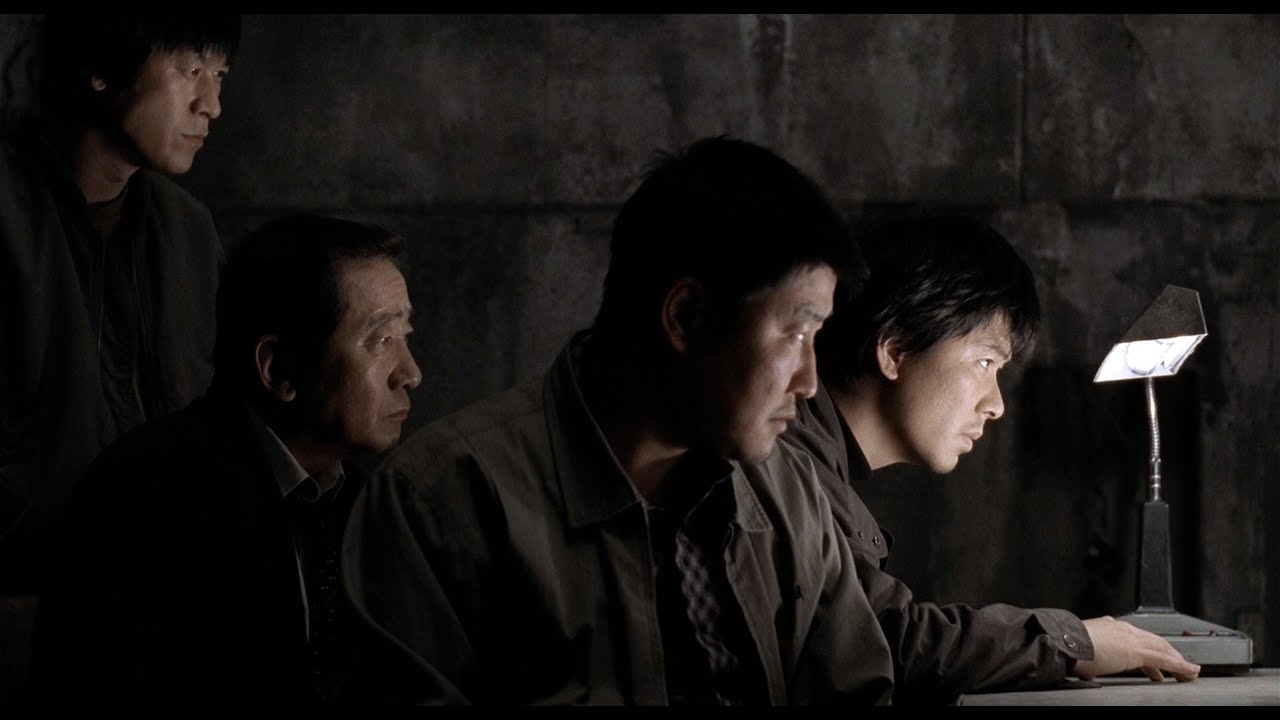
Along the lines of Talvar is the 2003 film ‘Memories of Murder’ loosely based on the real life serial rape-murders of young women in South Korea between 1986 and 1991. Much like Talvar, this film too follows a fictionalized adaptation of the shoddy investigation that ensues after the murders come to light. The film is not interested in who is behind the brutal acts but its psychological effect on a police force pushed to the edge in solving an unsolvable mystery. As the local detectives, with a touch of dark humour, try to pin the blame on and draw out false confessions from a series of suspects with a spurious connection to the case in order to make their job easier, a young promising detective from the capital city of Seoul arrives at the scene. Using his superior deductive methods and ingenuity, but regarded by the local detectives with suspicion, he tries to bring more order to the probe.


 But after all their efforts to find the murderer reach a dead end, and all their leads turn cold, the only tool left in the investigative arsenal of the authorities as well as the young, once optimistic detective, is an active imagination fuelling more unsubstantiated theories. Desperate attempts are made to string often incompatible pieces of the puzzle together. The mystery and the constant speculation that has led them nowhere continues to haunt them long after they have moved on from the case, some onto different professions altogether - thus showing how they keep looking for answers even in the face of a hopeless case.


There is some thought given to the place of women in society through the means of the investigation and the sexual violence aspect of the murders. When a junior female officer provides an important clue, the local cops snigger at her. One observes how they themselves leer at women, while being thrust with the responsibility of finding the rapist-murderer- thus showing how deeply embedded misogyny is in societies and doesn’t disappear even in the light of brutal crimes against women.


Police procedurals have been used to examine varied themes-right from the faults in the criminal justice system to other broader human values. Even in Hindi cinema, pure detective fiction like a Detective Byomkesh Bakshy exists comfortably alongside a Talvar in the same year, presenting to us the wide range in the genre.


A version of this piece was first published here: http://theindianeconomist.com/the-many-faces-of-the-police-procedural/

The Superficial Gender Role Reversal in the film Ki and Ka

In an industry that is notorious for producing commercial films with either stereotypical female characters, or those that objectify them with the male gaze, a mainstream film like Ki and Ka, which has a female protagonist who is ambitious about her career and a man who wants to take care of the house, sounds like a breath of fresh air. Such gender role reversals, when done on the screen, are often comedies and Ki and Ka is no different. However, neither does Ki and Ka flip gender roles successfully, nor is it a funny film that some might expect it to be.

Kareena Kapoor’s character Kia, is a woman who wants to be the best at what she does and see the pinnacle of success in her profession. Marriage and children are constraints for her, as she knows how career often takes a backseat for women for some time when they have to shoulder the majority of the housework and family responsibilities, with respect to kids and elders. Arjun Kapoor’s character Kabir, on the other hand, doesn’t have any conventional career ambitions but wants to stay at and look after the home like his mother. At the surface, both look like the perfect couple who have balanced out their roles and responsibilities in the marriage. They are made out to be so in the film as well, despite the glitches they face. But look a little deeper and you find that they are a dysfunctional couple, with Kia displaying a sexist streak right from the beginning. They have fights, but Kia’s borderline abusive behaviour towards her husband and her internalized misogyny are never truly resolved.

The gender-role reversal is superficial. There is a tangible attempt to make unpaid housework respectable and dignified, deserving of being viewed as an arduous, difficult and creative profession like other professions. The film also emphasises that work, be it in the office or at home, can be done by any gender. This is completely fine, but this is also accompanied by sexist humour when the term ‘wife’ is often used derogatorily by Kia. While it fits with the kind of character she is playing, a lot of the time it is used to generate humour to make the subject matter of the film more entertaining and palatable for the audience. The film doesn’t outwardly endorse her views, but the tone of humour and derision in which she casually makes some of her remarks makes us believe the opposite. The tone of the film is important here, because it takes one step back when it makes fun of what a conventional housewife is supposed to be.

This is classic misogyny. One of the main reasons why housework and childcare are looked down upon and taken for granted is because they are performed by women. Sample this fact – A woman wearing a man’s dress does not generate as much humour as a man in drag. This is because anything feminine is automatically considered inferior and worthy of ridicule as compared to anything masculine- which is the ideal that humans aspire to be in a patriarchy.

If a film, which claims to be progressive about gender issues, falls in the same pit of punch down humour, where stereotypes are peddled and the victims of that stereotype are made fun of to elicit a few laughs from the audience, then it’s not really doing anything new. And it’s not really different from those distasteful husband-wife jokes doing the rounds on WhatsApp, except that a man is playing the ‘wife’s’ role and a woman the husband’s.

While these are the issues with the content of the film, the film in itself is haphazardly edited, with many sequences showing problems of continuity. The premise of many scenes seems promising, but they fall flat on their face as we move on from one ineffective scene to the next. The only thing that stands out is Rajit Kapoor’s brief but genuinely funny performance as Kabir’s father, who has better comic timing than any of the lead actors, showing us the seasoned actor that he is.


The sequence that jolts us to the reality of marriage in India is the one with Amitabh and Jaya Bachchan (playing themselves in the film), where Jaya Bachchan casually asks her husband whether he would have compromised on his career for their home and marriage like she had to. This scene is done in a seemingly flippant way, but is quite poignant underneath when Bachchan indirectly points out the plight of millions of women who never had or have the power to choose to stay at home as Kabir did.

First published here :http://theindianeconomist.com/superficial-gender-role-reversal-ki-ka/


Tuesday, 29 December 2015

Why 'Court' (2015) deserves its National Award

Every year there is a wave of independent films that make a splash in critics’ circuits and at international film festivals, but only a few manage to make it to a commercial release. It is a formidable achievement on the part of the makers and the financiers of the film to bring it to the people it is based on.
As the multiple-award winning film Court completes one year since its premiere at the Venice Film Festival, it is time to look back on what won it the highest Indian honour for feature films – Best Feature Film at the National Awards.
Narayan Kamble, a lokashaheer (activist poet and folk singer), is charged with the abetment of the suicide of a sewer worker. This alleged abetment comprises of ‘inflammatory’ songs that Kamble sings about the deplorable condition of sewer workers, amongst other social issues.
The trial forms a major part of the film, and this columnist believes it succeeds in bringing to the screen the ground realities of the lower courts. However, after a few scenes into the movie we realise that the courtroom setting is a gateway to other important questions raised by the film.
What makes this film more than merely a realistic portrayal of the Indian judicial system is the humanity it imbues its characters with – each important character, including the seemingly infallible judge, is subject to deep-seated prejudices.
On one hand, the film exposes inefficiencies behind drawn-out court cases and an interpretation of the law which is true to the letter but not to the spirit. On the other, it unravels and explores the motivations, hopes, and fears of the people, and the tedium of their daily jobs. The film is equally interested in both what happens outside the courtroom and what happens within it.
The three main characters the film chooses to focus on are Kamble’s defence lawyer, the public prosecutor, and the presiding judge. While the court-scenes are top-notch, there are also thoughtful scenes where the film delves into the characters’ personal lives, often painting a picture counter-intuitive picture to the impression they make in their workplace.
The defence lawyer is seen enjoying an active nightlife, shopping for alcohol, and paying frequent visits to the salon – things which hint at his privileged background, but could be considered improper for a socially aware lawyer who provides legal help to the disadvantaged and engages in legal activism. His tough and powerful arguments, ridiculing various absurdities – such as antiquated laws dating to the 19th century – are deftly presented alongside a scene in which he breaks down, sobbing with his back to the camera. One wonders whether this points to the notion of sentimentality’s apparent incompatibility with masculinity.
The director’s keen lens is similarly cast on the gender divide in society through a seemingly harmless yet extremely insightful scene which shows men and women from the same family sitting apart and talking about two different sets of topics.

One can see the tedious monotony that has crept into her daily life when we see the public prosecutor go about her daily chores, or chat nonchalantly with her colleagues about handing out a prison sentence to Kamble and being done with the case.
The film subtly covers a range of issues in its two-hour runtime. These issues aren’t deliberately inserted in the narrative to score extra brownie points or to flaunt the label of social consciousness. They are an organic part of the narrative and help the viewer understand the characters’ motivations.
The social and economic backgrounds of the characters are expertly contrasted with one another, especially those of the two lawyers. Caste divides are silently commented upon as well – the testimony of thedeceased sewer worker’s wife shows how many people from backward castes have to undertake dangerous work just to feed their families. One also sees how linguistic backgrounds are both connecting factors and barriers. The public prosecutor shares a language (Marathi) with the judge, which perhaps gives her leeway with her lax arguments. Kamble’s lawyer, on the other hand, possibly because of his crisp English and ignorance of Marathi, has to work harder to find his feet, make himself understood and follow the interrogation of witnesses.
The greatest strength of the film, which is a credit to Tamhane’s observational acumen, is the subtle humour that underlines it throughout. Small but important details include lawyers hunting for clients outside the court, like roadside sellers who sell their wares to passers-by; the sessions-court judge peppering her dictation of court proceedings with casual instructions to her typist to exclude superfluous sentences; or the men who inadvertently interrupt a lecture by bringing in a fan and fumble around to find a place for it.
These seemingly insignificant details not only lend credibility to the film but also allow the viewer to maintain a position of relative objectivity, like a CCTV camera on a wall. This is helped by lengthy takes, where the camera stays still for a long period of time or follows the characters around instead of cutting to another angle, establishing the setting before the characters enter the frame, and the rolling of the camera long after a scene has ended.
For years, courts have been depicted as hallowed halls in which lawyers sermonise and deliver eloquent speeches, spectators break into sporadic applause like audiences at political rallies, and judges listen mutely to powerful pleas of justice. Court is a film which gives us a more convincing picture of reality, and, as expected, it is a far cry from regular cinematic fare.
Intelligent, funny, and insightful, Court deserves its National Award.

(The film has been written and directed by Chaitanya Tamhane and is the filmmaker’s debut film.)
First published here: http://theindianeconomist.com/why-court-deserves-its-national-award/

Source for image: http://www.hindustantimes.com/movie-reviews/court-review-tamhane-s-film-deals-with-intolerance-and-censorship/story-e44dGAYQQ59vqhv8rjtBiI.html